Feedback on Feedback
A practical model to get better at giving and receiving feedback

In a nutshell:
This blog shares a practical model for understanding feedback.
It explores four key ideas:
Feedback is created, not simply delivered.
It is shaped by assessment, the provider, and the relationship with the learner.
Feedback is actively processed,
requiring attention, interpretation, sense-making and acceptance from the receiver.
Feedback is embedded in context and develops over time,
shaping future learning, motivation and relationships.

Giving and Receiving Feedback is one of the most important and difficult skills in education and work. About 1 in every 3 of my posts touches on feedback in some way. Whether I’m talking about assessment, leadership, technology, coaching or classroom practice, feedback always seems to sit at the centre.. I have recognized its importance for years, yet somehow I still feel I need to develop both giving and receiving skills better.
But where does one even begin with this complex topic?
I found something that serves as a good starting point for me - a model that outlines feedback features and processes that influence effectiveness in this paper - Advancing feedback research in educational psychology: Insights into feedback processes and determinants of effectiveness. The model is necessarily complex, but serves as a good frame - a diagnostic tool to identify areas at least - for anyone who wants to improve feedback.
The original model is comprehensive and academically detailed. To make it easier to understand and apply, I've simplified the framework, reorganized some of the ideas, and added my own interpretation in the visual summaries below.
Let’s unpack it!
What influences Feedback?
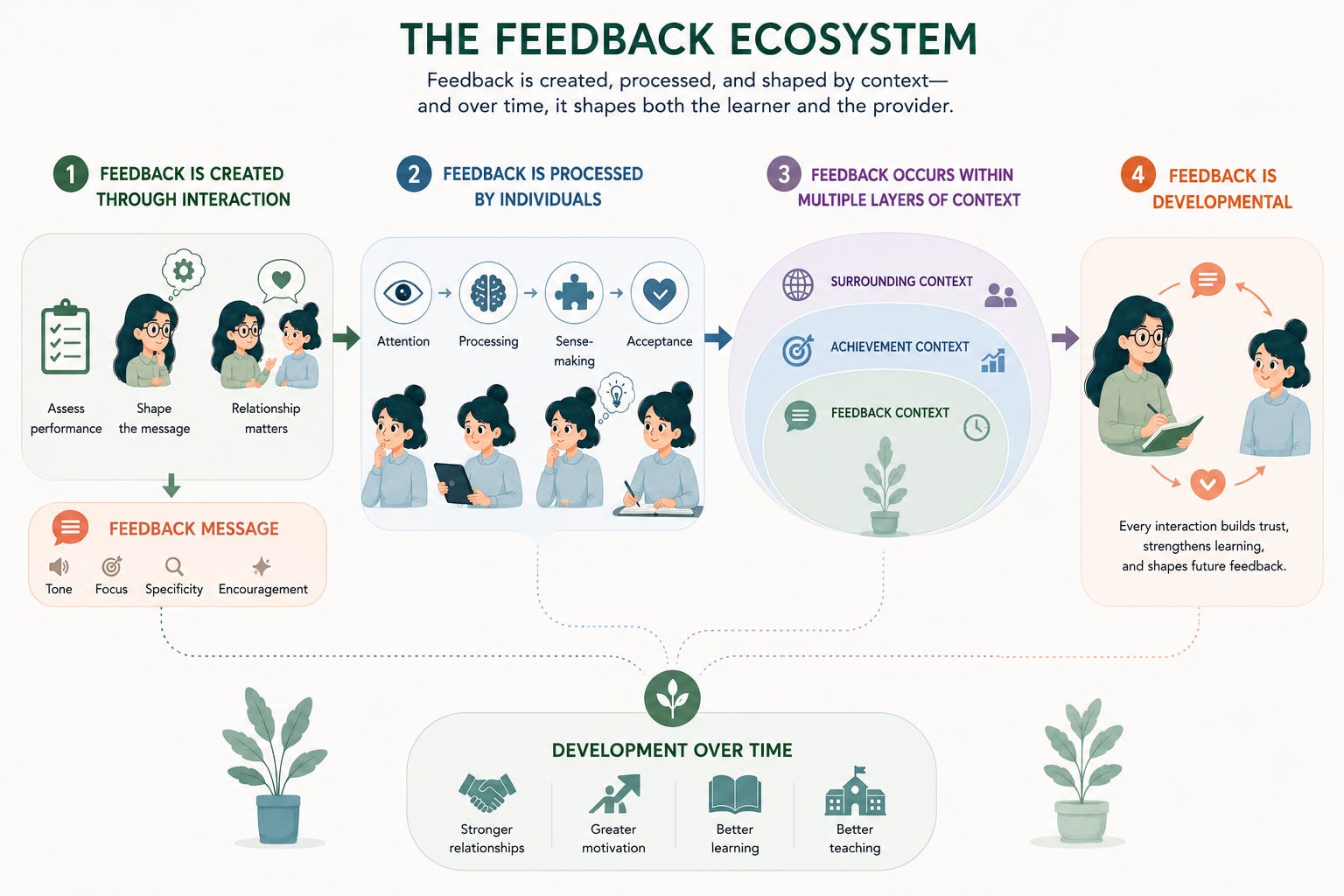
This model (REFLECT Model) synthesizes various processes and influences on Feedback. It outlines 4 key ideas:
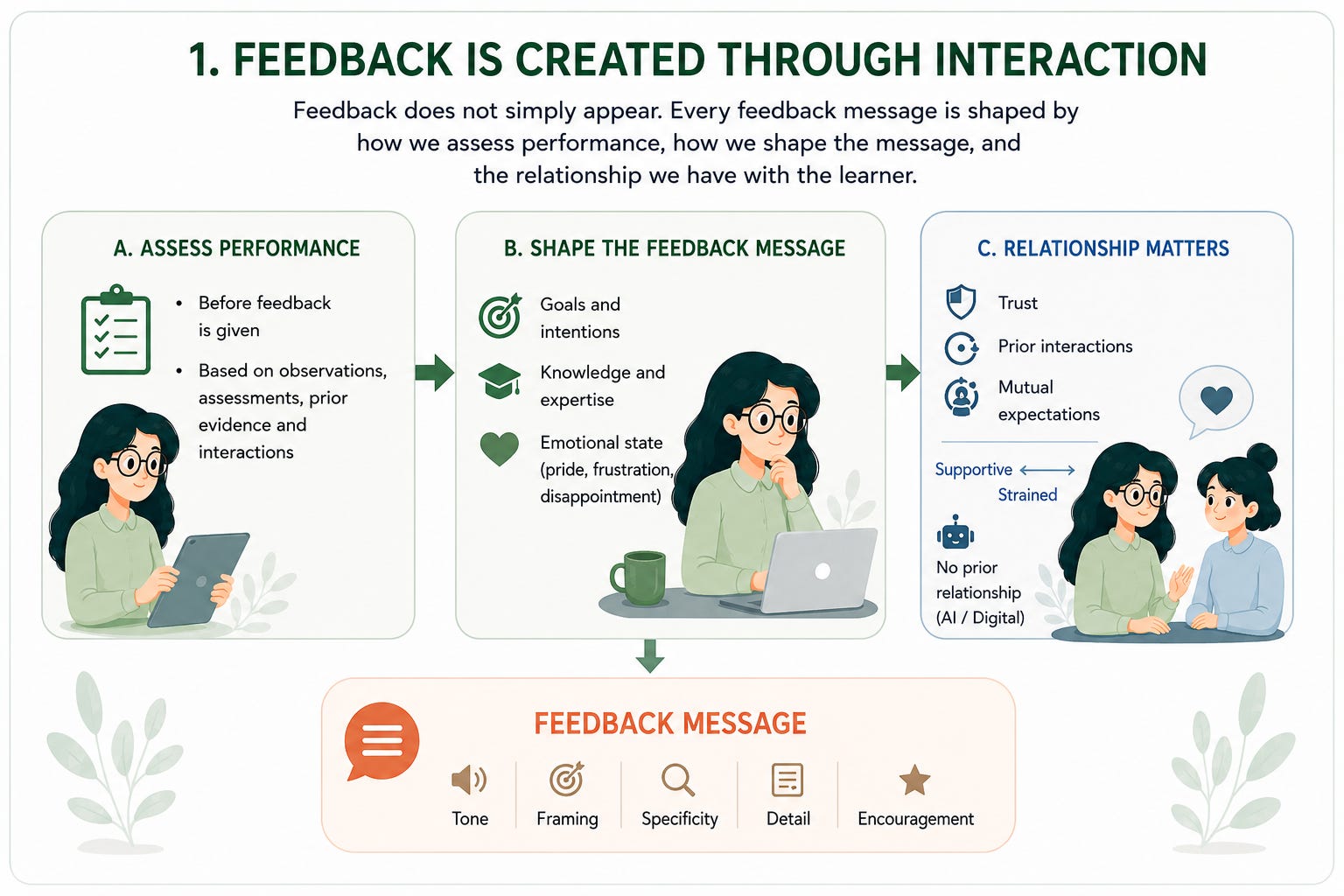
1. Feedback is created through interaction
Feedback does not simply appear. It is created through an interaction between the provider and the learner.
Every feedback message reflects our assessment of performance, our goals, knowledge and emotions, and our relationship with the learner.
2. Feedback is processed by individuals
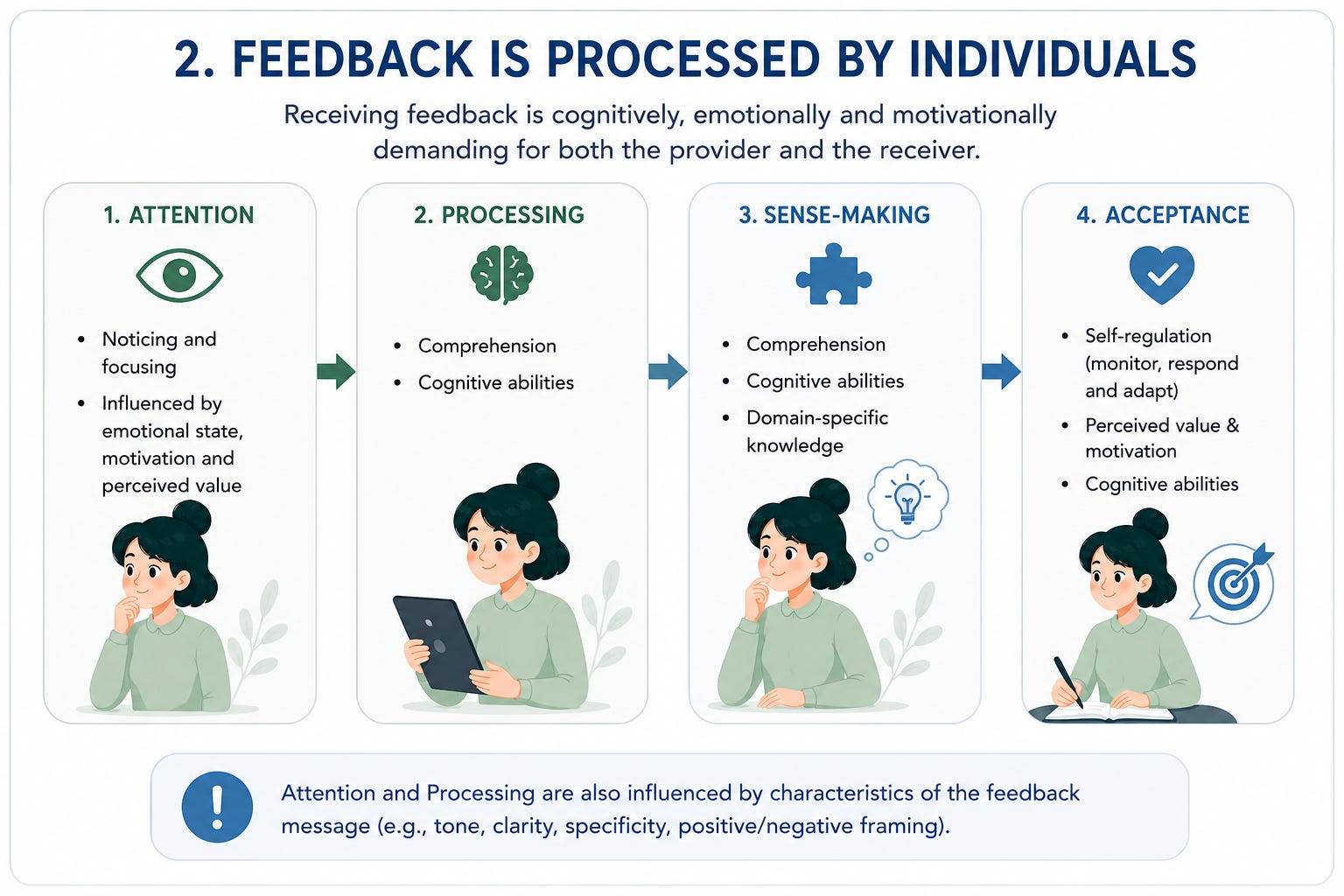
Receiving feedback isn’t passive. We first notice it, then comprehend it, make sense of it and finally decide whether to / how to act on it. Every stage is influenced by our motivation, emotions, prior knowledge and self-regulation.
Receiving feedback is cognitively, emotionally and motivationally demanding for both the provider and the receiver.
3. Feedback occurs within layers of context
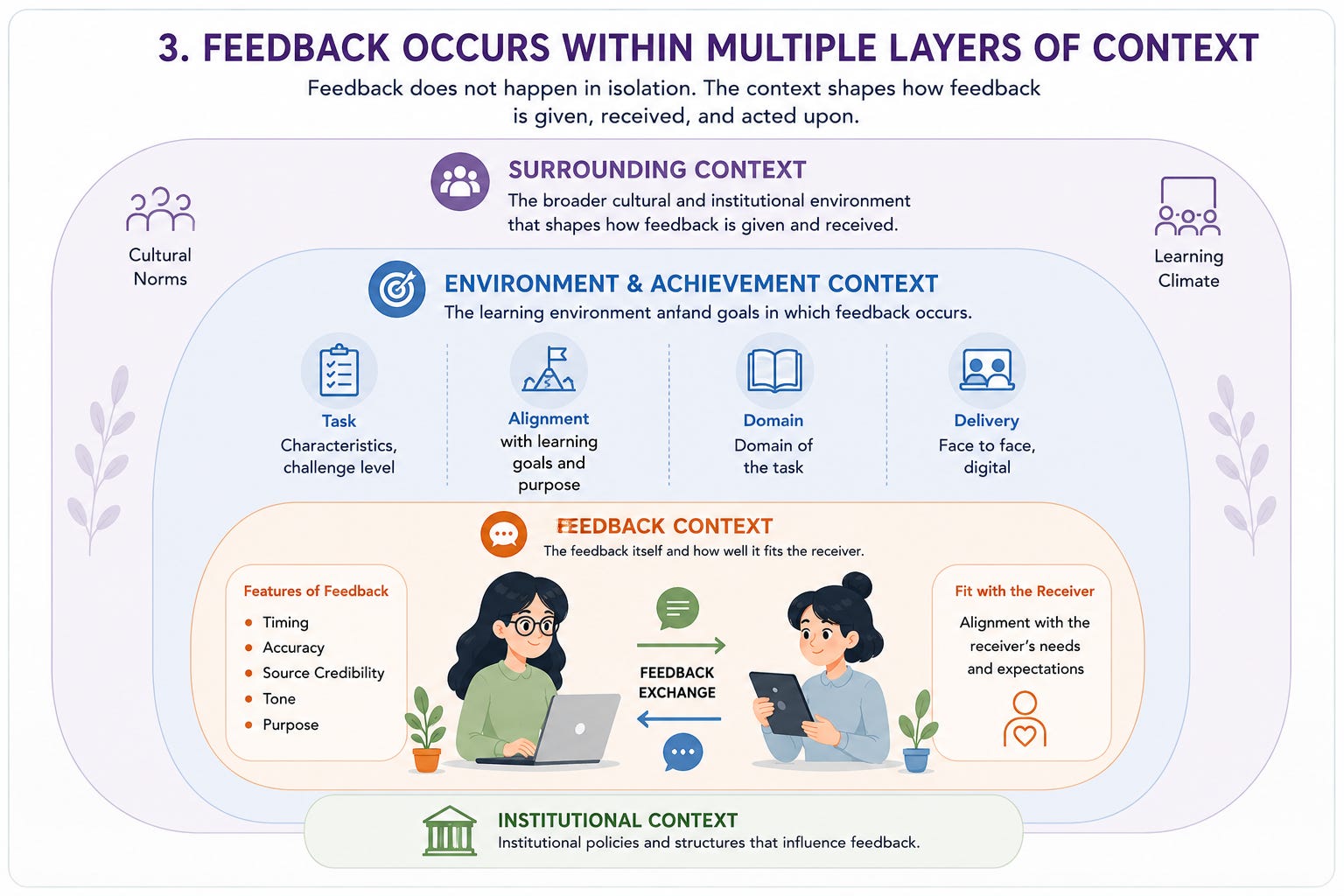
Feedback never happens in isolation. The feedback message, timing and delivery, the task, the classroom, institutional culture all shape how feedback is experienced.
4. Feedback is developmental
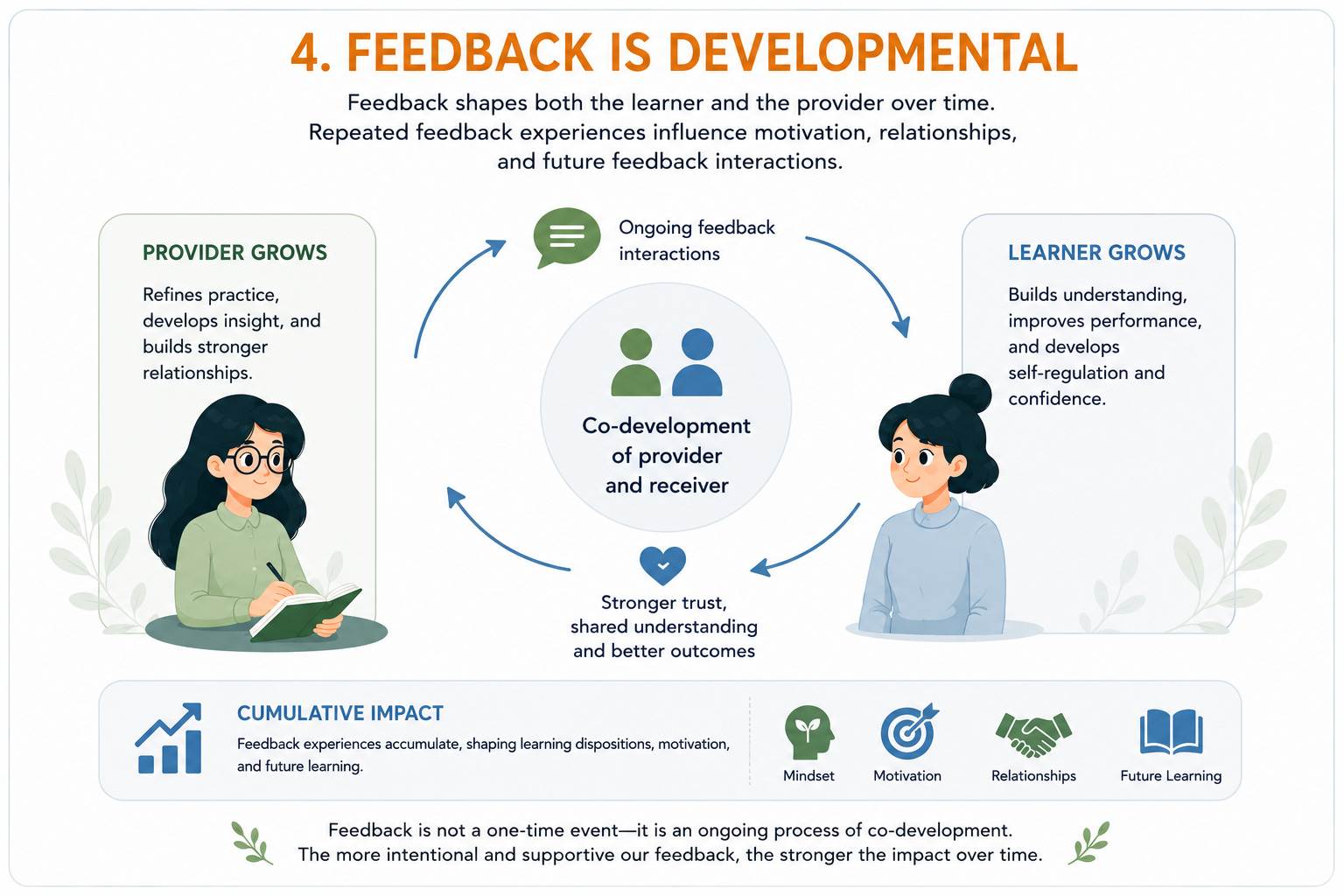
Every feedback interaction influences the next. Over time, feedback shapes relationships, trust, motivation, confidence and our willingness to seek or act on future feedback.
How will I use this model?
Below is a big picture summary of the model I have described:
This framework gives me four different lenses for improving feedback:
1. Create better Feedback
Design feedback messages more thoughtfully by considering not only what I say, but how assessment, relationships and my own thinking influence the message.
2. Become a better Feedback Receiver
Reflect on where I struggle: attention, interpretation, acceptance or self-regulation and intentionally develop those skills.
3. Improve teaching and school culture
Use the model to strengthen classroom practices, curriculum design and professional learning around feedback. I will build awareness and then a toolkit of strategies to support my team.
4. Build better systems
Design routines, policies and cultures that promote high-quality feedback over time.
Like most things in education, feedback turns out to be both simpler and more complicated than it first appears. There is no magic formula—but there are better ways of thinking about it. This framework is one that I'll be returning to often.